A First Look at the Proposed School System Budget
Our Budget Should Reflect Our Priorities

A First Look at the Proposed School System Budget
Last night, I attended the School Board meeting and listened closely to the Board and Superintendent’s presentation on the proposed 2026–27 budget. I also listened to two members of the public who offered comments, including the St. Tammany Federation President, Brant Osborn. Both gentlemen raised thoughtful points, and Board and administration representatives—including CFO Terri Prevost—provided detailed responses and useful context.
Since then, I’ve spent additional time reviewing the proposed budget documents. I encourage residents to review them as well. They are available through the STPPS Finance Department, including the FY 2026–27 Budget Message and FY 2026–27 General Fund Budget, along with the district’s special revenue, capital project, and debt service fund budgets.
The Good News
The district continues to maintain substantial reserves and a strong financial position. It has also shown that savings are possible.
Through attrition and reviewing vacant positions, the administration identified approximately $3.2 million in recurring personnel savings, which is being used to help fund the new employee pay increase. School Food Services has also significantly improved its financial position while continuing to provide free meals to students.
Those are exactly the kinds of efficiencies I want us to continue pursuing.
Areas of Concern
The General Fund is facing a roughly $24.8 million reduction in state Minimum Foundation Program (MFP) funding. The MFP is the primary formula Louisiana uses to fund public schools and determines a significant portion of the state funding each school system receives. Because much of that funding is tied to student enrollment, losing students can also mean losing state dollars.
For St. Tammany, the projected reduction is being driven by several factors, including declining enrollment, students moving to a new charter school, and changes in how the state is funding employee stipends.
To balance the proposed budget, the district plans to use approximately $24.8 million in one-time transfers from other funds.
That may get us through this budget year, but it does not by itself solve the problem for the following year.
As a Board member, one of my first questions would be simple:
What is our long-term plan if that revenue does not return?
I do not believe the answer should automatically be higher taxes, nor do I believe responsible budgeting means indiscriminately cutting programs or employees. We should continue examining vacancies and staffing as enrollment changes, administrative and contracted expenses, rising health-care costs, facilities and operating expenses, and successful cost-saving efforts elsewhere in the system to determine what can be replicated.
Our Budget Should Reflect Our Priorities
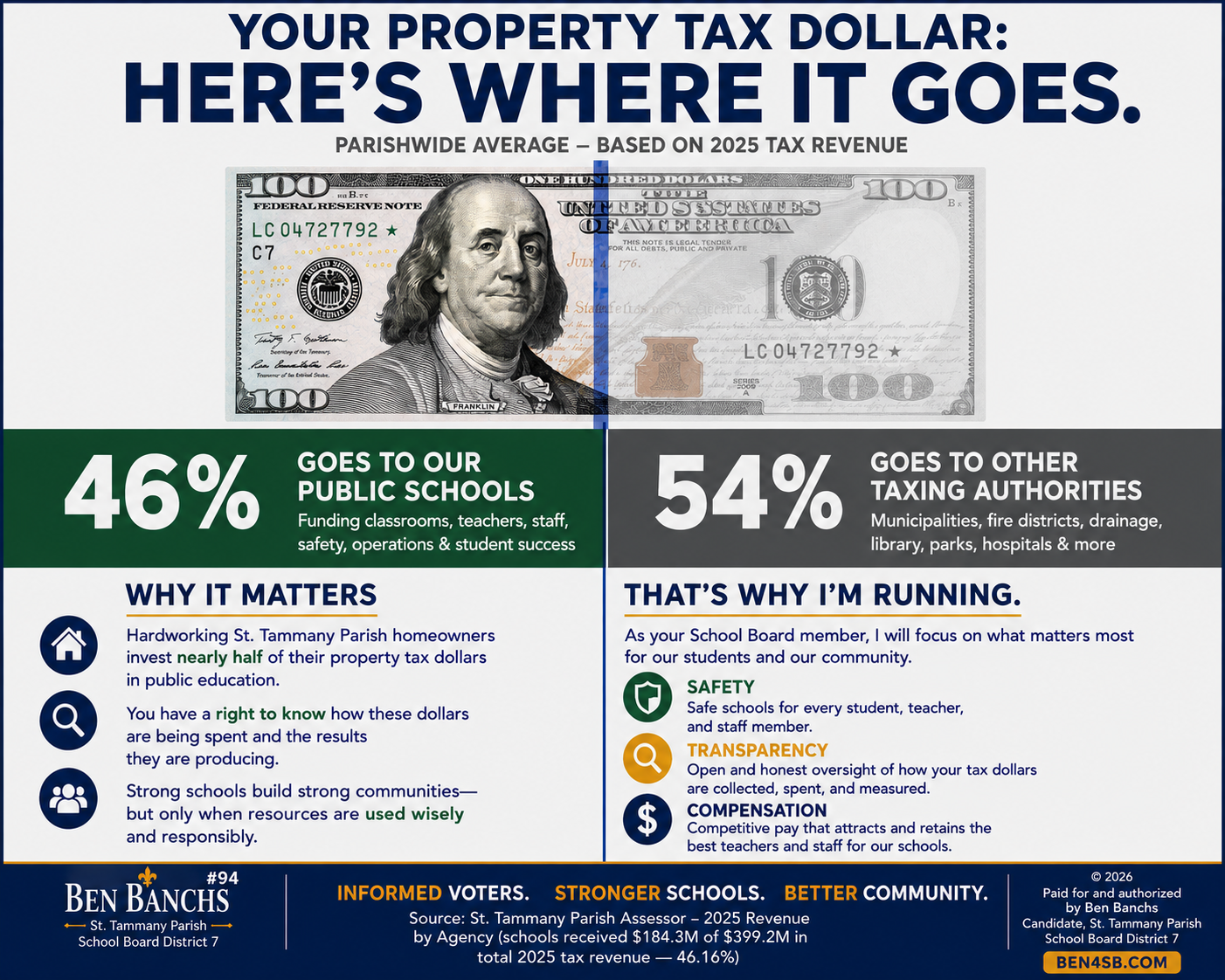
For me, those priorities include safe and secure schools, transparency and accountability in how public money is spent, and competitive pay for the teachers and staff who make our schools work every day.
Permanent raises require permanent funding. I will not promise employees money that isn’t sustainable. But I do believe we should make competitive compensation a priority and aggressively search for recurring savings that can be redirected toward our people.
The School Board oversees hundreds of millions of taxpayer dollars. If elected, I commit to attend all meetings, listen to the public and the administration, ask questions, study the numbers, and make decisions based on facts.
That is the approach I intend to bring to the School Board.
This post is on my
Facebook page so let me know what you think.