Lyon Was Not the First Time...
Judge Creel: “It appears to be systemic if this is going on...”

Lyon Was Not the First Time…
When I started writing this article I intended it to be a follow-up to the previous one about screenshots of text messages that were uploaded to Facebook, which seemed to show back and forth conversation between Principal Lauryn Faciane and Assistant Principal Tonya Barth and school district officials, including Superintendent Frank Jabbia. And while they looked legitimate, there was no confirmation that they were. Boy, how much has changed in the last week since I wrote that article.
Over the last seven days more information has come out, to include the official transcript of the court hearing where Faciane and Barth pleaded guilty and a robo-call to parents from Jabbia, and all of a sudden, this turned into a much more comprehensive look at everything that has transpired not just in the last few months, but rather the last several years. Bear with me, because this is a lengthy but necessary story that needs to be told.
As I wrote this story, my mind kept returning to the families whose experiences appear in it, the children that have been let down, and the scores of good teachers and other employees who did the right thing in the face of threats of retaliation, including being fired. Before there was an investigation or a court hearing, there was a child who was abused, a parent noticing an injury, an unexpected call from school, and a concerned mom or dad trying to find out why their child had come home upset. Understanding what happened next means following those families through the calls, meetings, and requests for help that eventually became part of the record.
It makes you ask yourself: what is going on? My wife and I moved to St. Tammany over 20 years ago for the better schools and education. Did we get it wrong? Or has a once great organization experienced a decline? To answer that we have to look back more than just a few months. But where do we start?
After my second article, somebody posted a table on a community Facebook page listing fifteen cases involving St. Tammany school employees going back to 2018. Ok, to me that seemed like a good starting point because it covers a period of time just before Superintendent Jabbia was appointed, providing enough of a historical context to see how things were before he took office and since. I compared the list with publicly-available news coverage, police and sheriff's releases, available District Attorney announcements, teacher-certification records, and federal court rulings. The timeline below identifies the cases identified in the list posted to Facebook, reported outcomes, and gaps in that review:
Timeline: 2018–2026
The dates below identify the reported incidents or legal actions. Allegations and arrests are distinct from convictions. An outcome not located in the sources reviewed does not mean that no outcome occurred. One entry in the original Facebook table, dated 2021, could not be corroborated and is excluded.
2018 — Covington Elementary. Seven families filed civil lawsuits alleging abuse and neglect in a special-education kindergarten classroom. The suits named teacher Tammi Cole, paraprofessionals Cindy Nebe, Sheila Schneider, and Rebecca Leidinger Ducote, school administrators, and the School Board. The district disputed the allegations. No criminal charges were reported, and the civil outcomes were not located in the sources reviewed. The four classroom employees left the district; the principal and assistant principal remained. [Reporting on the lawsuits](https://www.wwltv.com/article/news/local/investigations/nightmarish-classroom-culture-suit-claims-neglect-abuse-at-covington-elementary/289-587368393).
2022–23 — Woodlake Elementary. Paraprofessional Janine Rowell was accused of battering two autistic siblings. Reporting describes guilty pleas in September 2023 to two counts of simple battery and six months of probation. The parents also filed a federal lawsuit; its outcome was not located in the sources reviewed. [Louisiana Illuminator](https://lailluminator.com/2024/01/05/corporal-punishment-2/).
January 2023 — Mandeville Middle, now Gayle Sloan Middle. Parents alleged that paraprofessionals Tiffany Bourgeois, Leslie Cookmeyer, and Angela Rayer physically mistreated their blind, autistic eleven-year-old son. Criminal charges followed in February 2025, and the three entered diversion that September. Several claims in the parents' civil suit survived an April 2025 ruling; that ruling did not decide whether the alleged concealment occurred. A later civil outcome was not established in this review. [Federal court ruling](https://law.justia.com/cases/federal/district-courts/louisiana/laedce/2:2023cv07426/267464/81/); [diversion reporting](https://www.fox8live.com/2025/09/16/3-former-st-tammany-teachers-aides-enter-diversion-program-after-video-shows-incident-with-blind-student/).
January 2024 — Slidell-area elementary school. Paraprofessional Margarita Shevchenko received a misdemeanor summons for simple battery after allegedly striking a seven-year-old student with special needs. The district described it as a personnel issue. A court outcome was not located in the sources reviewed. [WBRZ](https://www.wbrz.com/news/slidell-area-elementary-employee-arrested-for-hitting-special-needs-student-in-the-mouth); [Fox 8](https://www.fox8live.com/2024/01/22/st-tammany-school-employee-arrested-accusing-striking-special-needs-student/).
April and June 2024 — Slidell High. Teacher Alexa Wingerter was arrested in April on allegations involving prohibited sexual conduct with a student and purchasing alcohol for minors, with additional allegations leading to another arrest in June. She pleaded guilty in September 2025 to two counts of prohibited sexual conduct. Reporting described no jail time, fifteen years of sex-offender registration, and surrender of her teaching license. The disposition of the other counts was not reported in the sources reviewed. [Fox 8 plea reporting](https://www.fox8live.com/2025/09/12/former-slidell-high-teacher-pleads-guilty-sexual-conduct-with-student/); [initial arrest reporting](https://www.audacy.com/wwl/news/local/slidell-teacher-charged-with-sexual-misconduct).
May 2024 — Pearl River High. Former teacher Arianna Kadinger was arrested on allegations of prohibited sexual conduct involving students, including alleged messages and photographs. Reports differed on the number of counts. A court outcome was not located in the sources reviewed. [Fox 8](https://www.fox8live.com/2024/05/03/st-tammany-teacher-accused-inappropriate-contact-with-students/); [WWL/Audacy](https://www.audacy.com/wwl/news/local/northshore-teacher-booked-for-sexual-conduct-with-students).
May 2024 — E.E. Lyon. Paraprofessional Monica Bates was arrested on a cruelty-to-juveniles allegation involving a student. Police withheld further details, and the district said she was no longer employed. A court outcome was not located in the sources reviewed. [WWL/Audacy](https://www.audacy.com/wwl/news/local/covington-school-employee-accused-of-harming-student).
June 2024 — E.E. Lyon. Teacher Catherine Mumphrey and paraprofessional Lauren Brenckle were arrested on cruelty-to-juveniles allegations involving a student with disabilities and classroom video. The district said both were no longer employees. The later Covington Police report states that both entered guilty pleas, but independent confirmation of the pleas, counts, and sentences was not located. [WBRZ](https://www.wbrz.com/news/two-st-tammany-parish-school-employees-arrested-for-cruelty-to-a-juvenile); Covington Police report 2026-000624, pp. 12–14.
June 2024 — Slidell High. Teacher Shelby Cavignac was arrested on an allegation of prohibited sexual conduct between an educator and a student. A court outcome was not located in the sources reviewed. [WAFB/Fox 8](https://www.wafb.com/2024/06/26/second-slidell-high-teacher-arrested-ongoing-investigation-into-inappropriate-relationship-with-student/).
February 2025 — Salmen High. Former teacher John Bowie was arrested on an allegation of indecent behavior with a juvenile involving reported inappropriate conversations with a student. A court outcome was not located in the sources reviewed. [Fox 8](https://www.fox8live.com/2025/02/04/ex-salmen-high-teacher-arrested-inappropriate-conversations-with-student-slidell-police-say/).
March 2025 — Mandeville-area high school, unnamed in the reporting. Teacher Jarvis Harry was arrested on 305 counts: 142 involving pornography with juveniles, 102 involving prohibited sexual conduct between an educator and student, 60 involving computer-aided solicitation of a minor, and one involving indecent behavior with juveniles. Authorities alleged payments to students for photographs that escalated to explicit images. A court outcome was not located in the sources reviewed. The original Facebook table placed this entry in 2023; the reported arrest was in 2025. [Sheriff's Office release](https://www.stpso.com/news_detail_T6_R99.php); [Fox 8](https://www.fox8live.com/2025/03/20/st-tammany-parish-teacher-arrested-soliciting-explicit-images-students-authorities-say/).
March 2026 — E.E. Lyon. Paraprofessional Marsha Ernest was arrested on an allegation of simple battery of the infirm involving a six-year-old with epilepsy and classroom video. The district declined to discuss employment, citing personnel confidentiality. A June 24 court date was reported, but an outcome was not located in the sources reviewed. [Fox 8](https://www.fox8live.com/2026/04/07/st-tammany-school-aide-accused-battering-seizure-prone-6-year-old-classroom/); [Law&Crime](https://lawandcrime.com/crime/teachers-aide-caught-on-film-throwing-seizure-prone-6-year-old-and-pinning-her-wrists-police/).
March 2026 — Riverside Elementary, Pearl River. Music teacher George Serban was arrested on simple-battery and cruelty-to-juveniles allegations involving Band-Aids allegedly placed over students' mouths. Reporting did not establish his employment status, and a court outcome was not located in the sources reviewed. [Contemporary reporting](https://wheb.iheart.com/featured/lend-a-helping-can/content/2026-03-19-st-tammany-parish-teacher-accused-of-putting-band-aids-on-students-mouths/).
May–September 2026 — E.E. Lyon administrators. Principal Lauryn Faciane and Assistant Principal Tonya Barth were arrested May 27 and pleaded guilty September 2 to failure-to-report charges. Barth's count concerned December 2025; Faciane's concerned September 2024 and April 2026. Both received probation and fines; Faciane also received suspended jail sentences. The certified transcript provides the details discussed later in this article. Subsequent WWL reporting confirmed that neither remained employed by the district, without establishing when or how their employment ended. [Certified court transcript]; [WWL employment update, via Yahoo](https://www.yahoo.com/news/us/articles/covington-school-had-history-unreported-204709531.html).
Fourteen of the entries on the Facebook list could be supported as to the reported allegations or charges. That does not mean fourteen convictions, though. I found reported misdemeanor guilty pleas in three timeline entries: Janine Rowell at Woodlake Elementary, Alexa Wingerter at Slidell High, and in the most recent case involving Faciane and Barth at E.E. Lyon. In the separate June 2024 Lyon classroom case involving Catherine Mumphrey and Lauren Brenckle, the later police report says both employees pleaded guilty, although I have not independently confirmed those dispositions. The January 2023 case involving three paraprofessionals at Mandeville Middle, now Gayle Sloan Middle, resulted in diversion in September 2025. The 2018 Covington Elementary entry involved civil lawsuits without reported criminal charges; I have not been able to establish how those lawsuits ended from publicly-availabel resources. For the remaining eight entries—Margarita Shevchenko, Arianna Kadinger, Monica Bates, Shelby Cavignac, John Bowie, Jarvis Harry, Marsha Ernest, and George Serban—I did not locate a criminal-case outcome in the free sources reviewed. Perhaps a review of paid repositories would provide a fuller account, but that is a gap in this review, not a finding that those cases remain pending or that no outcome occurred. Even without verifying the disposition, the more troubling aspect is that any of this is going on at all.
So with that, let's focus on the four cases for which the records describe more than just an allegation and/or arrest. These four cases describe what parents reported, how school officials responded, and how information reached people outside the school. As you read, keep one distinction in mind. The guilty pleas establish the reporting violations admitted by those defendants. A police report or court transcript also records what other people said, alleged, or concluded; its inclusion there does not automatically make every statement a finding by a court. Where I offer my own interpretation, I am drawing it from the information described here, with the gaps and disagreements included.
Sources: Case-specific links in the timeline above; Covington Police report 2026-000624, redacted; [September 2, 2026 court transcript]
First Things First
Before we dig in, let's get one thing out of the way. Everything you're about to read comes from somewhere: court transcripts, police reports, lawsuits, news coverage, and people who reached out to me directly. Some of it is nailed down cold — guilty pleas, a judge's own words, a detective's report. Some of it is allegations that haven't been proven. And some of it, I'll admit, is me connecting dots the way any reasonable person would after reading through this pile of records. I'm not going to stop every few paragraphs to remind you which is which — that gets old fast, for you and for me. Where the difference really matters, I'll say so. Otherwise, consider this your one and only disclaimer. Now let's get into it.
Covington Elementary, 2018
We start with a case involving special-needs children. One of the things that struck me as I was reviewing the list was how many of these cases involve our most vulnerable members of society. Abusing special-needs children...really? The fact that this is still a thing in 2026 is not just appalling, it is absolutely infuriating. And I'm not some naive dreamer that thinks that these things are never going to happen. There are bad people in the world, I get that. However, to the extent that we cannot fully eradicate evil, we have to deal with it swiftly and deliberately whenever it rears its ugly head. So the frustration isn't necessarily that these things happened, it's how the school district decided to deal with it, or rather, how they didn't.
The parents' concerns began with things they could see. According to the families' accounts reported at the time, children with disabilities at Covington Elementary were coming home with bruises, scratches, bite marks, and other injuries. Their families wanted to know what had happened during the school day. The school, however, was not being as forthcoming as one would expect in a situation like this. Their questions and concerns going unanswered, one mother eventually sent her son to school with a recorder concealed in his shirt. He had been coming home with marks on his body, and, according to reporting at the time, she had already taken her concerns to school leaders without getting them resolved. From her account, those concerns seemed to have fallen on deaf ears.
She's a mom. She's a parent. She's no different from you or me. Concern turns to frustration, anger, sadness, and the feelings of guilt consume you because here you are, a parent unable to protect your child from harm. Reading her account, I see a mother trying to protect her child—in this case, a child with special needs whom she was entrusting to the school system. She believed something was wrong, and her efforts to get answers had led her to send a recorder into the classroom. The employees at the school were supposed to be protecting her child and were responsible for his care. The family's allegations were that adults entrusted with that responsibility had mistreated him and that the parents had not been given an accurate account of what was happening. By the time she sewed the recorder into her child's clothing and sent him to school, she was just trying to find out what was happening during the hours when she could not be there to see it herself.
According to the family’s allegations, the recordings captured the very mistreatment they had feared: their child being physically and emotionally mistreated by the people responsible for teaching and protecting him. The recordings became part of a larger set of allegations. Two lawsuits, filed by seven families in 2018, named teacher Tammi Cole; three paraprofessionals, Cindy Nebe, Sheila Schneider, and Rebecca Leidinger Ducote; principal Melissa Eason; assistant principal Kristy Winget; and the St. Tammany Parish School Board. The families alleged that children were physically mistreated and denied food, that injuries went undocumented, and that parents’ signatures were forged on official school reports. Taken together, those allegations raised questions about whether wrongdoing had been concealed. Their complaints concerned both the treatment of the children and what the adults responsible for them told their families afterward.
The allegations were also very specific and disturbing. According to reporting on the lawsuit, the recordings captured adults screaming and using profanity toward the children, including a teacher saying she wanted to “break his f**king fingers off.” The lawsuit also alleged that the audio documented a teacher kicking a child in the chest and saying she hoped a sleeping student would never wake up, as well as encouraging a student to rub his own genitals (KNOE, August 10, 2018).
For parents whose children, because of their disabilities, could not readily explain their school day, the recordings provided another way to ask what was happening. A mother interviewed about the cases described being afraid to send her child back because he could not tell her what happened to him or speak up if someone mistreated him.
The allegations were, nevertheless, disputed by the St. Tammany school district, including claims that the families said the recordings supported. Reporting at the time described a response by the school district denying the claims in the June lawsuit. In the meantime, the four classroom employees accused in the allegations left the district, while the principal and assistant principal remained employed. Covington's police chief reviewed recordings and described them as inappropriate, but said he did not believe they established criminal conduct. No criminal charges were reported in the sources reviewed.
One parent's involvement continued beyond the litigation. Kathleen Cannino later described working with legislators and advocates on installing cameras in special-education classrooms. Louisiana enacted Act 456 in 2021, allowing parents to request cameras in certain classrooms, subject to funding provisions. That later effort grew out of concerns about how families could learn what was happening to children who had difficulty communicating for themselves.
This part of the district's history predates Frank Jabbia's appointment as Superintendent in October 2020. It belongs in the chronology, but it should not be attributed to his tenure as superintendent.
Sources: [KNOE, August 10, 2018](https://www.knoe.com/content/news/Louisiana-school-sued-for-alleged-abuse-of-special-needs-boy-490609771.html); [WDSU, August 7, 2018](https://www.wdsu.com/article/four-employees-no-longer-work-for-covington-elementary-following-alleged-abuse-of-special-needs-kids/22657592); [The Advocate, August 2018](https://www.theadvocate.com/new_orleans/news/communities/st_tammany/article_67d990c6-9993-11e8-b131-03ab077f05ac.html); [The Advocate, August 24, 2018](https://www.theadvocate.com/new_orleans/news/communities/st_tammany/article_1fffb540-a7cc-11e8-9afc-cb349ae71c6f.html); [KALB](https://www.kalb.com/content/news/Louisiana-school-sued-for-allegedly-abusing-special-needs-students-490608671.html); [Cannino's account](https://votecannino.com/home/); [Act 456 digest](https://legiscan.com/LA/supplement/SB86/id/206470/Louisiana-2021-SB86-Resume_Digest_for_SB86.pdf); [district superintendent biography](https://www.stpsb.org/our-district/leadership/superintendent).
Gayle Sloan Middle, 2023
Five years later, in early 2023, another family was trying to piece together what had happened to a child who depended on adults to get him through the school day. Their son was eleven years old, blind, and autistic. The school was Mandeville Middle at the time; it is now Gayle Sloan Middle. According to the parents' allegations, someone from the school called them after the events of January 30, 2023, and told them their son had been "love tapped" by an employee. One incident. That was the story. The parents say the way it was described left them with the impression there was little to worry about.
That impression did not survive long. The parents learned that three paraprofessionals, Tiffany Bourgeois, Leslie Cookmeyer, and Angela Rayer, had resigned. Three employees walking out the door over a "love tap" does not add up, and the parents started asking why. What they eventually alleged was not one incident but three: one aide kicked their son, another took away his cane and struck him with a walkie-talkie, and a third pushed his head into a cafeteria table. The April 2025 federal court order describes footage of these alleged incidents happening within roughly ten minutes, as a blind eleven-year-old made his way through the hallways and into the cafeteria.
Three adults abuse one child in the span of ten minutes. Incredible. And think about the phrase itself. A "love tap." An adult employee put hands on a blind, autistic eleven-year-old, and the word the school reached for, according to the parents, was a term of endearment. There is no version of a love tap that belongs in a classroom. None. So even before the parents learned about the resignations, even before they learned there were three incidents and not one, the school had already told them everything they needed to know about how it saw the situation. What happened to that child and how the school described it simply do not live in the same world. That gap, between what was done and how it was portrayed, is the whole story of this district's response, and it's reflected with just two words in a phone call.
According to the parents' account, school employees reported the incidents to Principal Cheryl Barton, and a school resource officer reviewed the footage. The parents say they learned about the kicking through the SRO, not from the principal. When they asked Barton why she had not told them about the other incidents, the parents say her answer was that she must have forgotten.
That is where an assistant superintendent enters the story, and her later involvement in the parents' requests for video is exactly why the central office question will not go away. When did central office personnel learn about each allegation? And once they knew, what did they do about it, if anything? The record does not fill in that whole sequence. But with three resignations, an SRO reviewing footage, and an assistant superintendent personally handling the family's video requests, it is almost impossible to believe the central office did not know what happened in that hallway.
Then came the fight over the video. The parents say they asked for it again and again and kept getting reasons why it could not be handed over. According to the allegations summarized in the court's order, Assistant Superintendent Kimberly Gardner eventually told them the footage had been deleted because more than thirty-one days had passed. The parents did not buy it. They alleged the district withheld the footage for nearly two years. They also alleged that Barton told a teacher not to discuss the incidents because she would handle them. "I'll handle it" is becoming a refrain in this series.
The first criminal charges identified in the reporting came a full two years after that January morning, when the Sheriff's Office charged all three former aides in February 2025. That September, they entered a diversion program. The civil lawsuit was already moving on its own track, so the two-year gap is about the reported criminal charges, not about a total absence of legal action.
For the parents, according to their allegations, the concern was not two years away. It was immediate: two of the employees they later accused of mistreating their son had continued working with him. The eventual charges and the diversion agreement do nothing to explain those earlier employment decisions. I have not been able to establish what conditions diversion imposed on these three individuals, including whether counseling was required. The reporting I reviewed also does not establish where they work today or whether they are still around children.
For this family, the story did not end with that first phone call from the school. It ran through the questions raised by three resignations, through the repeated requests for footage, and through the explanation that the video was simply gone. The criminal charges and the diversion program are another chapter, but they do not settle the parents' civil allegations about what they were told, or why information was not provided when they asked for it. You have to follow both tracks to understand this case: the alleged physical mistreatment of a child, and the separate fight over how the school responded.
The civil lawsuit kept going. In April 2025, Judge Eldon E. Fallon ruled on the School Board's request for summary judgment, which is a request to have claims thrown out without ever going to trial. He did not throw this one out. He allowed the disability-discrimination and battery claims to continue, and he declined to dismiss the federal civil-rights, negligent-training, and intentional-infliction claims at that stage, leaving room for certain arguments to come back later. He did dismiss the standalone negligent-infliction-of-emotional-distress claim.
So the ruling left the hard questions open for further proceedings, including whether the incidents were downplayed or concealed. The judge did not decide the truth of the parents' allegations; he sent those questions forward. I have not been able to establish how the civil case ended after that.
One more name to file away: Gardner. She comes up again later in this article, in a different case at a different school. When we get there, I'll lay out exactly what the record shows and what it doesn't. For now, just remember the name.
Sources: [A.F. v. St. Tammany Parish School Board, April 25, 2024 order](https://law.justia.com/cases/federal/district-courts/louisiana/laedce/2:2023cv07426/267464/22/); [April 25, 2025 order](https://law.justia.com/cases/federal/district-courts/louisiana/laedce/2:2023cv07426/267464/81/); [Fox 8, April 9, 2025](https://www.fox8live.com/2025/04/09/three-former-mandeville-school-aides-accused-striking-disabled-student-under-their-supervision/); [Fox 8, September 16, 2025](https://www.fox8live.com/2025/09/16/3-former-st-tammany-teachers-aides-enter-diversion-program-after-video-shows-incident-with-blind-student/).
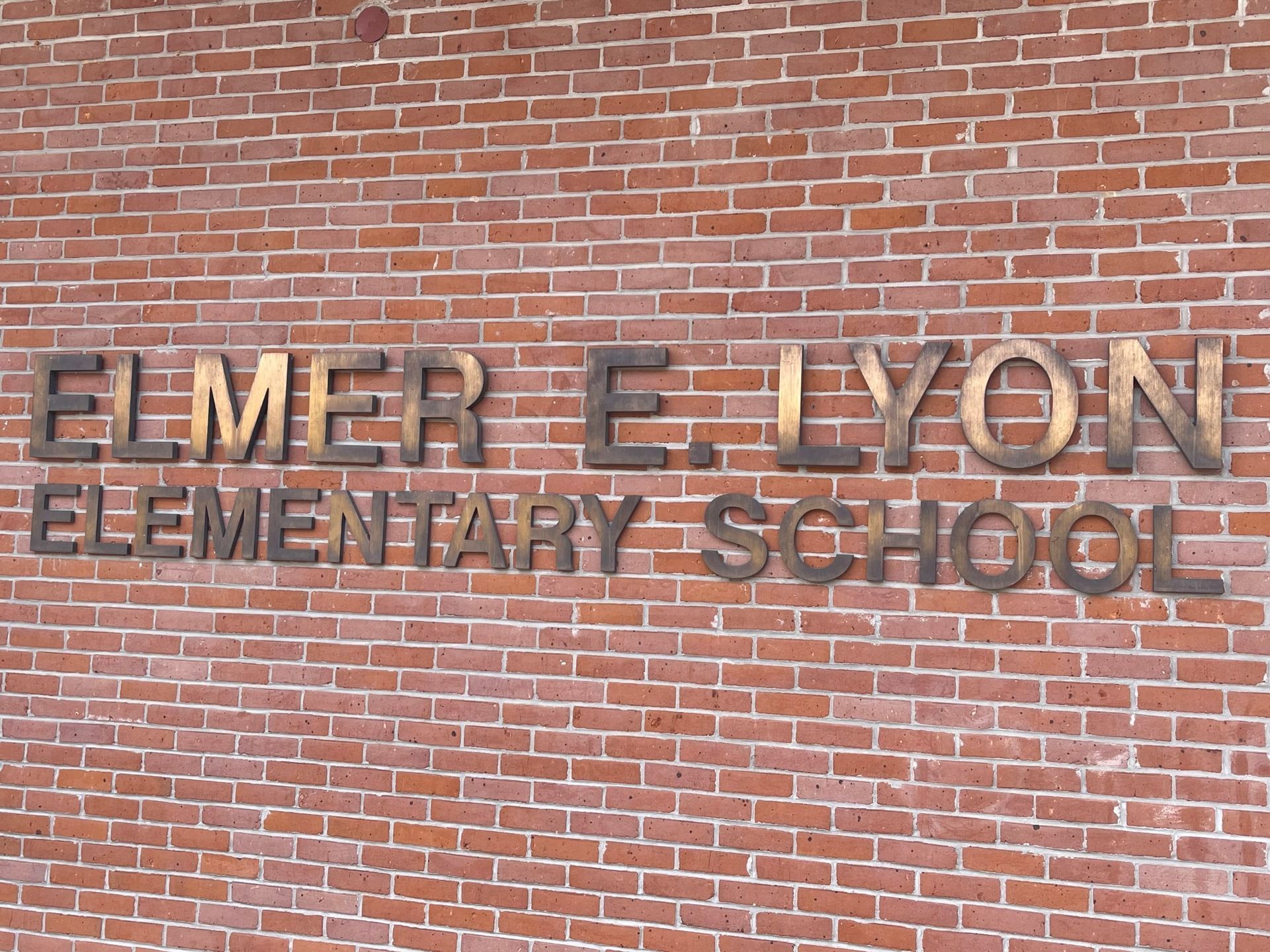
E.E. Lyon, 2024
This earlier Lyon classroom case turns up inside the Covington Police report written by Detective Brian Brown, the same report that documents the recent investigation of the administrators. If you have been following this series, the opening will sound painfully familiar. A mother notices her daughter is not acting like herself after a classroom move during the 2023–2024 school year. The child has disabilities and a speech delay. She cannot simply come home and tell her mom what happened to her that day.
That is the thread running through every one of these accounts. The children in these stories were the ones least able to speak for themselves. When a child cannot tell you what happened, the adults around her become the only line of defense, and the question becomes what those adults did with what they saw. Reading these accounts side by side, I have real concerns about how this district handled suspected abuse and whether information was minimized or kept from parents. The vulnerability of these children is exactly why the families' fight for answers is the heart of this story.
So this mother did what any of us would do. She picked up the phone and called the principal. That principal was Lauryn Faciane. According to the account the mother later gave police, Faciane told her she would talk to the teachers involved. Then nothing. No follow-up, no call back, no answers.
A few months go by, and the mother starts seeing scratches on her daughter's arms. Her little girl is getting angrier, more irritable, and still cannot explain why. So the mother reaches out again, to the teachers and to Faciane, and this time she describes something she saw with her own eyes: an adult in that classroom pulling her daughter by the arm. The police report notes that photographs were taken documenting the injuries. This was not a vague feeling. There were pictures.
By the mother's count, she contacted Faciane roughly three separate times. Her husband, interviewed separately, remembered three phone calls of his own and said the principal told them she would handle it.
Then the phone rang in the other direction. The mother recalled someone calling to tell her that a bruise on her daughter had come from something that happened at home. You have been calling the school for months about injuries on a child who cannot speak up for herself, and the answer that finally comes back is that it must have happened under your own roof. She did not accept that explanation. And the sequence matters: injuries, repeated calls to the principal, and then a call pointing the finger back at the family, right at the moment the family was pressing the school for an explanation. Whatever the intent behind that call, that is what it looked like from the parents' side of the phone.
After they noticed bruising on their daughter's arm, the parents stopped waiting on the school and took her to an emergency room. The mother said plainly why: nobody had addressed their concerns. Hospital staff called 911. Lyon's school resource officer, Janel Walters, met them at the hospital, took the complaint, and said she would review the school's video.
That is how this family's story finally reached law enforcement. Not through the principal. Not through the district. Through an ER nurse who did what the school never did and picked up the phone. And notice what Walters said she would do next: review the school's video. That footage had been sitting at Lyon the whole time the parents were calling. The father told police that Faciane never shared anything from it with them. Police investigated, and based on what they found, a teacher and a paraprofessional were arrested in June 2024 on cruelty-to-juveniles charges. The later police report says both entered guilty pleas.
Detective Brown wrote that Faciane had the parents' complaints in hand. She had the photographs. And she did not report the suspected abuse to law enforcement or to the Louisiana Department of Children and Family Services. Brown also explained that he was new to the department in 2024 and, at the time, had not recognized that reporting failure for what it was: one piece of the larger pattern he would go on to describe in the later investigation.
Relation to the Court Transcript
Before we get to the later bathroom incidents, there is a date in the court record that needs explaining.
The recently released transcript identifies one of Faciane's guilty pleas as covering the period from September 1 through September 30, 2024. The prosecutor described abuse of a student by a paraprofessional during that month that was never reported to law enforcement. September 2024 is three months after two of her own employees were arrested in June on cruelty-to-juveniles charges arising out of the case of the child with special needs you just read about. Whatever review happened at Lyon after those arrests, and whatever lessons were supposed to have been learned, by September a child was allegedly being abused by a paraprofessional at that school and the principal, once again, did not pick up the phone.
The transcript does not say whether that September count concerns the same child, a later episode involving that child, or a different case entirely. What the plea confirms is a September reporting violation.
The transcript also describes a message Faciane received recommending that she call instead of email. The prosecutor read that as an instruction not to put the information in writing and said Faciane replied that she would do so. Anyone who has spent time inside a government agency knows what "call me, don't email" usually means. But in that passage the prosecutor did not name the sender, did not date the exchange, and did not expressly connect it to the September 2024 incident.
The unofficial screenshots posted to Facebook include a September 20, 2024, exchange attributed to Gardner and Faciane with strikingly similar wording. It is easy to put those two side by side and conclude they are the same exchange. They may well be. But here is where I pump the brakes, because this is one of the few places where the difference really matters: the transcript does not name the sender, and the attribution to Gardner rests entirely on those unauthenticated screenshots. If the attribution holds up, it puts a named central-office official on the other end of that message. Until then, it is an inference — a strong one, but an inference.
Through all of it, Faciane stayed. She remained principal of Lyon Elementary into the 2026 investigation. The records I reviewed leave unanswered what information reached the central office after the June 2024 arrests, what review followed, and whether the earlier parent complaints were ever part of that review. The September plea and the message discussed in court only add to the list of things somebody needs to explain: what was communicated, and to whom.
The district's public response to the June arrests shows it knew the employees had been arrested. Which officials knew about the parents' earlier calls, the photographs, and the alleged failure to report is a different question, and it is the one that matters when you ask what review followed and why Faciane was still running that school two years later.
Sources: Covington Police report 2026-000624, pp. 12–14; [WBRZ, June 6, 2024](https://www.wbrz.com/news/two-st-tammany-parish-school-employees-arrested-for-cruelty-to-a-juvenile); September 2 court transcript, pp. 6, 9 and 13; unofficial September 2024 screenshots, not independently authenticated.
E.E. Lyon, 2025–26
On December 1, 2025, another mother got a call from Lyon. There had been an incident involving her son, and she needed to come to the school.
In her account to police, she described sitting down with Faciane and Barth and being told that her son and another child had engaged in sexual conduct in a bathroom. The school called it childhood curiosity. By the time she got there, according to her account, administrators had already questioned both children and taken written statements from them. Her son had been asked to explain what happened several times. Then he was brought into the room and made to explain it again, this time in front of his mother.
She did not accept the curiosity label. Both children were suspended, and she said she had to sign paperwork before her son could come back to school. She objected to the wording on another form and said she was required to sign the original version anyway.
So she went looking for help on her own. She contacted Hope House to ask about services for her son. According to her statement to police, her contact there explained that the school should have reported the incident to law enforcement, because that is how an appointment gets arranged. Her statement does not say Hope House searched its records and confirmed there was no report. It describes an explanation of how the process was supposed to work. No further contact about an appointment followed, according to her account, and she ended up arranging private counseling herself. She also called the school board office. There, she said, an employee described the incident once again as mere curiosity and assured her the suspension would not show up on her son's record.
All right, before I move on, let's talk about the whole childhood curiosity thing. Two young children, sexual conduct in a school bathroom, written statements describing sexual touching already sitting in the administrators' hands, and the word that came back to this mother, first from the school and then from the school board office, was "curiosity." Whether children are curious is not the question. Children are curious about everything. The question is what the adults do when curiosity turns into something that a Hope House advocate, a police detective, and the mother herself all recognized as a matter for law enforcement. Reporting it is not a judgment on a child. Reporting it is how a child gets help. And when the same brush-off comes from the principal's office and the central office, according to this mother's account, that is no longer one administrator's bad call. That is how the district talks. Detective Brown put his own disagreement with the curiosity framing in writing, which tells you the people whose job it is to investigate these things did not buy it either.
Meanwhile, SRO Walters had been asked to look at video. According to Walters, Barth wanted to know how long the children had been in the bathroom and told her they had been playing. That was it. Walters said Barth never told her the encounter was sexual in nature. So she reviewed the hallway footage, wrote her notes, and when she asked for more information, Barth cited student confidentiality and, according to Walters, expressed concern that the matter could get messy and public.
Sit with what that means in practice. The one person in that building whose job is law enforcement was handed a video and told to time how long two kids were in a bathroom, without being told why anyone cared.
It was weeks later, through conversations among teachers, that Walters said she learned what the incident actually was. Until then she had footage of children walking in and out of a bathroom and no idea what those children had already told the administrators. The prosecutor described the same gap at the September hearing: the school had the children's written statements describing sexual touching, and that information never made it to the SRO.
Then it happened again.
On April 28, 2026, a nine-year-old disclosed another incident involving sexual conduct in a school bathroom. The other boy was the same child from December. This time the disclosure reached a para-educator, a teacher, the school counselor, and the principal.
The nine-year-old's mother said Faciane called to tell her something inappropriate had happened. When she asked what, she said Faciane put her off until the next day while the school reviewed cameras and talked to others. She did not wait. She asked her son, and he told her.
The next morning she showed up at school upset and unsure whether she could even walk through the door. In her statement she described a teacher urging her to go in and ask what happened. She did. The receptionist told her Faciane was in meetings. She waited about twenty minutes, left a request for a call, and went home. A teacher called her back. When she returned, the people waiting to meet with her were Detective Brown and SRO Walters.
Here is how the police got there. Walters said the school's mental health provider told her about the incident that morning. According to the police report, Walters called her supervisor, Sergeant Bart Ownby, who called the Criminal Investigations Division. That chain, starting with the MHP and not the front office, is what brought detectives into the building.
And the mother of the boy involved in both incidents? She said the school never notified her about April 28 at all. She was called to the school the following day, after police were already there. She told Detective Brown she felt the whole thing was being brushed aside because the children were young, and that she was getting no help from the school.
To be fair, Brown himself asked Faciane to have that mother come to school without explaining the incident over the phone. But that instruction concerned the April 29 call, after police were involved. It does not explain why, by the mother's account, the school had not contacted her the day before.
In court, the prosecutor described the lack of notice as potentially allowing the children to return to the same setting near each other the next day.
Faciane told Brown she had contacted her administration and been directed to notify the family. That passage in the report does not say who gave the instruction. When Brown asked whether she had reported the April incident to DCFS, she said no. Brown submitted reports on both the December and April incidents and wrote that DCFS confirmed it had no earlier report of either one. Two incidents involving the same child, four months apart, and the state agency charged with protecting children heard about neither one until a police detective picked up the phone.
The report also captures how officials explained themselves. The school board employee who had spoken with the December mother later questioned whether every incident like this needed to be reported. Brown recorded his disagreement with treating the conduct under investigation as ordinary curiosity.
There is one more account in the report, and it is about a different incident, so take it for what it's worth. An officer filling in as SRO described finding a child outside kicking a ball with no adult going to him. When the officer asked about calling the child's parents, he said a mental health provider told him administrators avoided those calls because they did not want to be criticized on Facebook. That is secondhand, and it concerns a different day. But if it is accurate, it tells you something about the instincts at work in that front office.
The Reporting Pattern Described in the Records
Taken together, these accounts come down to three things: protecting children, telling parents the truth, and reporting suspected abuse to the people whose job it is to investigate it. On that third point there is no ambiguity. The guilty pleas establish specific reporting violations by Faciane and Barth. The rest of what you have read here is a mix of allegations with different outcomes and outcomes I have not been able to establish. And the same concerns keep surfacing across these accounts, again and again.
But set the legal questions aside for a moment and look at how these parents describe finding out what happened to their kids. The Gayle Sloan parents were told their son had been "love tapped." The December Lyon mother was told it was childhood curiosity. The parents in the earlier Lyon case were told the principal would handle it. Three different conversations, three different schools or years. What they share is that in each one, the parent walked away knowing less than the school did.
In every one of these stories, a family was trying to find out what happened to their child during the school day. The Covington families were dealing with children who could not readily explain what had been done to them. The Gayle Sloan parents fought for footage. The earlier Lyon family ended up in an emergency room, where hospital staff called police. The December mother went looking for counseling on her own. Every one of those steps is something a parent had to do after the conversation with the school did not give them answers. The court records address a separate question, which is who bears legal responsibility. The parents' accounts address a simpler one: what does it take to get the truth out of this district about your own child.
The records described here involve more than one employee and more than one school. They leave real questions about supervision, about reporting procedures, and about how a concern travels, or fails to travel, from a classroom to a principal's office to the central office. Some of these accounts describe fear of retaliation or fear of discipline. What these records do not necessarily establish is a district-wide policy of abuse, concealment, or protecting its image at any cost...but, honestly, it's hard for the average person not to reach that conclusion. And I'll be the first to admit that a conclusion that big would need more evidence than the events and allegations laid out here provide, but what is clear is that something is definitely rotten in Denmark.
Evidence aside, what they do establish is enough for parents and taxpayers to justify their concerns. Two administrators at one elementary school admitted in open court that they did not report suspected abuse of children. Parents at two schools describe being given explanations that did not match what happened. And in more than one case, the truth reached law enforcement not because the school picked up the phone, but because a nurse, a mental health provider, or a parent did. Those are the facts. The questions they raise belong to the people who run this district, especially Superintendent Jabbia, and to the School Board as a whole that is supposed to be the voice of voters, taxpayers, and parents, and is supposed to hold the superintendent and the rest of the district accountable.
Sources: Covington Police report 2026-000624, pp. 1–10 and 14; September 2 court transcript, pp. 4–8.
In Judge Creel's Courtroom
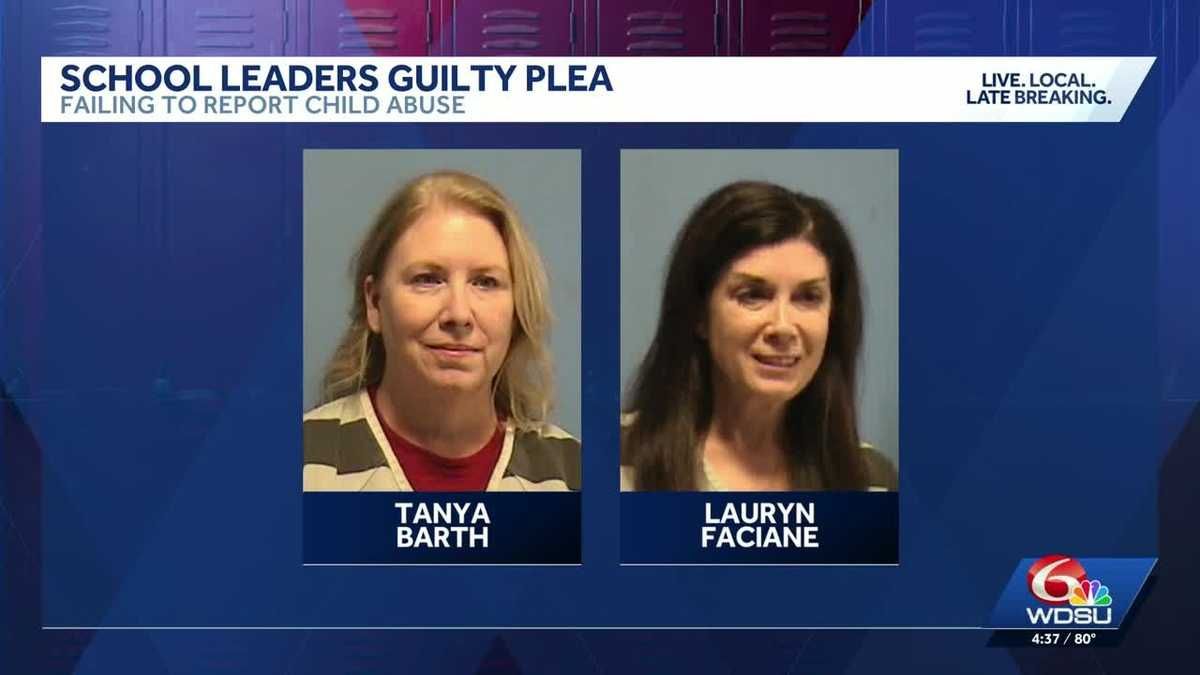
Faciane and Barth were arrested on May 27. By September 2, they were standing in front of Judge Ellen M. Creel.
Assistant District Attorney Elizabeth Authement appeared for the State. Roy K. Burns, Jr. represented both administrators. Authement told the judge she had talked through possible outcomes with the children's parents or guardians, including probation, and none had objected. No family members came forward in the courtroom. No victim-impact statements were offered. These families had already been through enough, and they wanted it over.
Barth pleaded guilty to the reporting violation from December 1, 2025. Faciane pleaded guilty to two counts, one from April 28, 2026, and one from September 2024. Those are the dates in the plea proceeding.
Understand what a guilty plea is. It is not an allegation. It is not a screenshot somebody posted on Facebook. It is not a parent's account that the district can wave away. It is two school administrators standing in open court, with a lawyer at their side, telling a judge: yes, I did this. Everything that follows in this section is now part of the official record of the 22nd Judicial District, and they put it there themselves.
After hearing the facts on Barth, Creel asked whether the two were still employed. Their own lawyer said they might be on leave, he was not sure. Barth answered for herself: administrative leave. What the courtroom did not hear, and what WDSU reported from the district's response that same week, is that the leave was paid. Two administrators had just admitted to failing to report suspected abuse of children, and the St. Tammany Parish School Board was still paying them.
Then the prosecutor got to the messages on Faciane's phone. Some of the wording was familiar to anyone who had seen the screenshots circulating online. But this was different. This was a prosecutor reading them to a judge as the factual basis for a guilty plea, and the defense attorney agreeing the facts were sufficient.
One message described the administrators' reaction to the investigation and called the idea of reporting everything ridiculous. Ridiculous? Reporting the suspected abuse of children, which the law requires of every principal in this state, was the thing they found ridiculous. No, they are the ridiculous ones!
Another message referred to "Frankie," whom the prosecutor identified as Jabbia, and described him saying that this could happen to anybody at any time. Judge Creel asked the obvious question: was that concern for the children? No, the prosecutor told her. The message was about the administrators, the teachers, and the others who had failed to report. This could happen to any of us. Not any of the kids. Any of the adults who might get caught.
The prosecutor also read an administrator's account that he wanted to protect them, and that child-on-child abuse was an area they were not necessarily reporting. This is in the official court record! A school administrator admitting that child-on-child abuse in St. Tammany Parish schools is not being reported! The prosecutor characterized the messages as an acknowledgment of reporting failures inside the schools. To be clear: those were relayed accounts, not a recording of Jabbia speaking. But the content is in the record, and nobody in that courtroom disputed it.
And then the detail that closes every escape hatch. Authement told the court that Detective Brown and Hope House had provided training specifically on reporting child-on-child abuse, and that these administrators attended it. They were trained on exactly this by the same detective that was assigned to investigate it. They sat in the classroom. They heard a detective and a child advocacy center tell them what the law required. And they didn't do it. And afterward, in case you missed it in the paragraph above, a message on the principal's phone admits that child-on-child abuse is something they were not necessarily reporting. That is not confusion. That is not a gray area. That is a choice.
Judge Creel read the reporting statute out loud. She told the two of them that principals and assistant principals are on the list of mandatory reporters, and she put it in words nobody could misunderstand: "The buck stops with you people." Before she accepted Barth's plea, she asked her to think about the children by name. The judge would not speak those names in open court because they were child victims. But she wanted Barth to know that she knew who they were, and that the judge knew she knew.
Barth got two years of probation under Article 894, a $500 fine, and court costs. Creel said she would not entertain any request to end that probation early. Faciane got two years of probation, a $500 fine on each count plus costs, and six months on each count, suspended. The judge refused to give Faciane Article 894 treatment, and she said why: the principal was more culpable than the assistant principal. The buck stopped with her, and the judge sentenced her that way.
Creel explained that the families wanted this finished without dragging their children into a courtroom to relive it. Their wishes were part of why she accepted probation. Then she said something you do not hear from the bench very often. She was disappointed she did not have more latitude in sentencing. Read that plainly. The judge looked at what these two did and wished the law let her do more.
When she came back to the messages, she did not mince words. "The selfishness in the text messages. There was zero concern exhibited for children, zero." She called out what she saw as an attempt to shift blame onto the SRO, the officer who was handed hallway footage and told to time two children in a bathroom without being told what those children had already reported. And then the line that should be ringing in every ear at the central office: "It appears to be systemic if this is going on." Exactly! Systemic. That is not my word. It is Judge Creel's. The judge said the quiet part out loud, on the record, after reading the messages these administrators were sending to each other. For anyone with a brain, it's obvious that these are not one-offs. This is how the district is choosing to operate, and it is outside of the law.
At the end of the proceeding, Creel directed that the administrators be fingerprinted and sent to probation. Then she told them to leave her courtroom. When they did not move fast enough, she told them again.
Source: September 2, 2026 transcript, State of Louisiana v. Tonya Barth, 4875-M-2026, and State of Louisiana v. Lauryn Faciane, 4876-M-2026, 22nd JDC, reported by Donna Lanata Heath, CCR, pp. 3–15.
The Employment Questions
The court hearing answered the criminal charges against Faciane and Barth. What the district did about their jobs is a different story, and it is one the district has told in pieces.
WDSU's reporting from the week of the September 2 pleas said both were still on paid administrative leave, citing the district. That is the detail Barth's courtroom answer left out. Not just leave. Paid leave. Through the arrest in May, through the summer, through the morning they stood in front of Judge Creel and admitted what they did, the checks kept coming.
Then, sometime after that, they were gone. WWL Louisiana reported that a district spokesperson confirmed both were no longer employed. When did that happen? Were they fired, or did they resign? The report does not say, and the district has not said. So their status has changed, but the timing and the terms of their exit are still a blank.
Now compare that to how the district handled the people below them. On the day Monica Bates's arrest was announced in May 2024, the district said she was no longer employed. Same day. Within days of the June 2024 Lyon classroom arrests, the district said the teacher and the aide were no longer employees. Days. Those announcements do not tell us whether those employees resigned or were dismissed, or when the decisions were actually made. But the public message went out fast, and it was unambiguous.
For administrators like Faciane and Barth who failed to report, the district's reaction was less immediate...paid leave for months, a guilty plea, and then a quiet confirmation weeks after the fact that they were no longer around.
And in other cases, there was barely a message at all. In the Slidell battery case, the district called it a personnel issue. In the Ernest case, it declined to discuss employment and cited confidentiality. In the Serban case, reporting described the employment status as unavailable while the district talked about student safety instead.
Put those side by side and you get a district that speaks clearly and quickly when the person in trouble is a classroom teacher or an aide, and goes quiet when the person in trouble is an administrator. That is what the public record shows. What it does not show is why. The announcements do not explain what policies were applied, what the reasons were for each decision, or what review, if any, was conducted on Faciane and Barth between their arrest and the end of their employment. Their departure does not answer the question of what the district was doing during the months between arrest, paid leave, guilty plea, and exit. Those dates and those decisions are what it would take to compare how this district treats the people at the bottom of the building with how it treats the people running it. The district has them. The public does not. It's time the public gets the whole truth and nothing but the truth from the school district.
Sources: Case-specific links in the timeline above; [WDSU reporting dated September 4](https://www.bishop-accountability.org/2026/09/northshore-elementary-school-principal/); [Fox 8 district response](https://www.fox8live.com/2026/05/28/two-women-booked-child-abuse-st-tammany-court-records-show/); September 2 transcript, p. 6;
[WWL Louisiana employment update, via Yahoo](https://www.yahoo.com/news/us/articles/covington-school-had-history-unreported-204709531.html), accessed September 19, 2026.
Flashback 2020: Jabbia's Interview
While I was writing this article, I remembered that the interviews for the superintendent job had been posted on the official School District YouTube Channel. So I went back and reviewed the video, and it is worth your time to watch how Frank Jabbia said he would run the school district before he got the job. I would highly recommend you watch that interview yourself.
In his opening remarks, he talked about listening to students, parents, and employees, and treating people with dignity and respect. Later in the interview, he described parents who were afraid of repercussions if they raised concerns. In a separate answer about employees, he talked about constructive contact between teachers and the central office, and about building an environment where people could speak openly. He said student needs should be the starting point for budget decisions. Asked how his own performance should be judged, he talked about high expectations and accountability for the superintendent. He described giving Board members the information they needed. And on the Board's role, he said this: "Your job is to question us. Our job is to answer." For the record, I wholeheartedly agree with everything the superintendent said in his interview about how the job of superintendent should be undertaken.
With that in mind, I want you to hold onto every one of those lines, because the rest of this section is about what happened when parents raised concerns, when employees spoke openly, and when the people whose job it is to ask questions asked them.
All this section does is put the promise and the record on the same page. You judge the distance between them.
Start with May 18, 2026. Jabbia and Steve Alfonso sat down with Covington detectives. According to Detective Brown, Jabbia told them the district's JPAMS record showed the SRO had been notified. Alfonso handed over the record. It described an internal investigation. It did not document notice to the SRO. It did not document notice to DCFS. And according to Brown, Alfonso told Jabbia, right there in the meeting, that the notification he was describing was not in the document.
Think about that. The superintendent of one of the largest school systems in Louisiana, whose budget this year exceeds half a billion (with a "B") dollars, is in a room with police detectives investigating whether his administrators failed to report the abuse of children, and the thing he tells them is contradicted by his own paperwork and subordinate before the meeting is over. What Jabbia was relying on when he said it is not explained in the report. But his interview answer of "your job is to question us, our job is to answer" sounds a lot different when that answer does not survive contact with law enforcement or with the district's own file.
Now the teachers. Brown wrote that he spoke with current and former Lyon teachers on May 24 and 25, and that most of them wanted to talk off the record. Why? Because they were afraid of being fired or disciplined. These are the employees who, six years earlier, were promised by Jabbia an environment where people could speak openly. Now, in 2026 they were asking a police detective not to use their names for fear of retaliation by the district that Jabbia runs.
And in that same section of the report, Brown reproduced a message attributed to Jabbia. The message proposed complaints against an employee who had cooperated with police and the SRO. Then it moved to termination recommendations. The stated grounds were alleged late reporting by that employee and alleged inaction by the SRO.
Read that again, and take it all in. In the middle of a criminal investigation into administrators who did not report child abuse, Jabbia appeared to be less concerned about the administrators who actually broke the law, and more concerned about going after the employee who cooperated with the police. Did Jabbia follow through on going after the people who cooperated? Were the complaints ever filed, and what came of them? Was anything done about the fears those teachers described? Nobody has answered those questions. But the instinct on display is unmistakable, and it is the exact instinct Jabbia told the Board in 2020 he was going to root out. He described parents who feared repercussions for speaking up. Six years later, the record has his own employees feeling the same way, and a message with his name on it proposing repercussions for at least one of them.
Then add what came out at the September hearing: the messages in which another administrator described comments attributed to Jabbia, the "this could happen to anybody" line, the account of wanting to protect them. Getting to exactly what was said in the administrators' meeting and what directions followed would take more records, or the people who were in the room telling the truth about it. But step back and look at the whole picture. A man told the School Board he would listen to parents, protect employees who spoke up, and answer the Board's questions. The record now shows parents who could not get answers, teachers who would only talk to police off the record, a message proposing to go after an employee who cooperated with law enforcement, and a superintendent's statement to detectives that his own document did not back up. The contrast does not need me to exaggerate it. It is sitting in the district's own YouTube channel and the Covington Police Department's own report, and anyone can go read both.
Sources:
[STPPS interview recording](https://youtu.be/OQcHFB7A1bE?si=R3T5SZIciHljq23f&t=372), particularly 10:21–11:16, 16:09–19:21, 20:34–21:51, 28:09–30:48, 31:25–34:28 and 1:05:50–1:09:24; Covington Police report, pp. 10–11; September 2 transcript, pp. 8–10. Interview references were reviewed against YouTube's automated transcript, not a certified transcript.
The September 17 Message
Fifteen days after his principal and assistant principal pleaded guilty, Jabbia sent a recorded message to parents and employees, and a transcript has been shared both on Facebook and by local news outlets.
He described a serious situation at an elementary school involving mandatory reporting. He said the district had added safeguards to strengthen reporting and documentation. He said the district was working with DCFS, the District Attorney's Office, and law-enforcement partners on guidance, training, and support. And he said student safety and well-being were the district's highest priority.
Now read what the transcript does not say. It does not say Lyon. It does not say that two administrators pleaded guilty in criminal court. It does not say what happened to their jobs. It calls what happened a "situation," and it places that situation in the prior [school] year. Situation? If the school superintendent believes that two administrators pleading guilty in criminal court is just a "situation," we have a lot of work to do! This is a robocall to every parent in the parish about the criminal failure to report suspected abuse of children, and the man delivering it could not bring himself to say the name of the school or the word guilty. Parents at Lyon found out what happened to their kids from police detectives and from each other. Now the district's official account, delivered a full two weeks after the pleas, is vaguer than the Facebook screenshots.
And the safeguards? The message says they were added. It does not say what they are. It does not say when they took effect. It does not say what an employee is now supposed to do differently on the day a child tells them something. "We added safeguards" is the sentence you say when you want credit for fixing something without anyone being able to check whether you did. And what, pray tell, could those "added safeguards" be? The law seems to be pretty clear, so I wonder what needed to be added other than telling district employees that they need to comply.
Somebody did try to check. Brant Osborn, president of the St. Tammany Federation of Teachers and School Employees, posted about the call on Facebook along with the Federation's response. The Federation asked for exactly the things the message left out: the written procedures, the actual directions employees are being given about contacting DCFS and law enforcement, whether the new safeguards were reviewed with the Board and with outside agencies, and what reporting activity has followed. Then it asked the question that matters most in a district where teachers were talking to a detective off the record for fear of their jobs: what protections exist for employees who report concerns or cooperate with investigators?
WWL also reported the district's position that it follows mandatory-reporting laws. Consider the audacity of that sentence. Two of its administrators had just admitted in open court, fifteen days earlier, that it did not. Both things cannot be true at the same time. The station also reported that Jabbia described cooperation with outside agencies on employee guidance and training, and reaffirmed student safety as the priority. It also reported that a special board meeting was scheduled for Monday, September 21, on the district's response.
Jabbia told the Board in 2020 that their job was to question him and his job was to answer. Well...we're waiting!
Sources: Federation Facebook post and accompanying transcript dated September 17, 2026. The account of the recorded message follows the supplied transcript; the original audio has not been independently checked against it. [WWL Louisiana employment and district-response update, via Yahoo](https://www.yahoo.com/news/us/articles/covington-school-had-history-unreported-204709531.html), accessed September 19, 2026.
Direct Contacts From Concerned Individuals
Since the earlier articles ran, people have been reaching out. Comments, emails, conversations in parking lots. Two of those accounts are from teachers, and both are about what happened when they tried to report a problem. I have not independently verified either one. I am keeping the names, the schools, and the administrators they identified out of this. But I am sharing the substance, because these two people did not have to say anything, and what they said sounds a lot like what a police detective wrote down in May.
The first came through the contact form on my website. The writer identified herself as a former district teacher who left several years ago. At one school, she recalled, the principal sent an email threatening immediate dismissal if staff discussed classroom violence or abuse outside the school, or even with teachers who were not directly involved. She attributed that instruction to Superintendent Jabbia and said some teachers she knew at other schools described getting similar messages, while others had not. She described quiet conversations with a counselor about what to do, and being afraid of losing her job. I have not seen the email, so I cannot tell you its wording or who actually sent it. The attribution to Jabbia is hers, not mine.
The second account showed up in a public comment. The writer said she taught a self-contained special-education class and reported two paraprofessionals for mistreating nonverbal autistic students. Once again, the abuse of special-needs children rears its ugly head. In this case, non-verbal children who are unable to tell anyone what's happening to them. She alleged that her principal discouraged her from talking about it, so she went around the principal and contacted the authorities and the school board herself.
Then, she said, she was pushed out. The administrator, she said, was later promoted. When she tried to come back to the district two years later, she said she was turned down because she had broken her contract. I have not reviewed the documentation she says she has, and I do not have the district's side of any of it.
Here is what twenty years of representing employees has taught me about stories like these. A conversation is where you find out there is a problem. It is never where you prove one. After the conversation come the records: the email somebody swears they still have, the complaint they filed, the response that came back, the personnel file. That work has not been done on these two accounts yet. But they sure do rhyme with what is already sitting in the public record, and they are two more entries in a growing pile of claims circulating throughout this parish, online and in conversation.
But there is one thing that is not anecdotal. The Covington police report records Lyon teachers telling Detective Brown they were afraid of being disciplined for talking to investigators. That is documented. It is what those teachers said to a police officer, in the middle of a criminal investigation, in 2026. And when a former special-education teacher and a former classroom teacher come to me, years apart, from different schools, describing the same fear in nearly the same words, I am not in a position to call it a coincidence, and I am not in a position to call it proof. What I can tell you is that this is the next thing that has to be run down, with these teachers' documents in one hand and the district's account in the other.
Because think about what it means that these accounts came to me at all. A campaign website contact form and a comment section are not where teachers are supposed to have to go to report that children were mistreated and that they were punished for saying so. That they ended up here tells you something about where they felt they could not go.
What Remains Unresolved
The Facebook table is what prompted me to take a look back. The common thread with all of these stories: it was parents that had to demand accountability first. Not once in any one of these incidents was it the school or the administration taking proactive steps to identify abuse, report it, and correct it before it got worse. One family used a recorder. Another kept asking for video after three aides quietly resigned. At Lyon in 2024, it took a trip to the emergency room to get law enforcement involved. In the later Lyon case, the SRO said she learned what the children had actually reported weeks after administrators asked her to review footage, and only because teachers were talking. Every time, somebody outside the front office had to force the door open.
And the door is still not all the way open. What did the central office receive after the spring 2024 Lyon complaints and the June arrests? What review followed? How does the September 2024 count relate to the earlier classroom case, if it relates at all? Who sent the call-instead-of-email message described in court, and what was it about?
Then the later investigation. What was Jabbia relying on when he told detectives that JPAMS documented SRO notification, when the document his own staffer handed over did not? What became of the proposed complaints against the employee who cooperated with police and the SRO who was left in the dark? What information reached the Board, when did members get it, and where is the follow-up written down?
The employment questions are separate from the criminal ones, and they are not answered by a spokesperson saying two people no longer work here. When did their employment end, and how? What review, if any, is still going on? How much did this parish pay two administrators between May 27 and the last day of their paid leave, and were any of their legal fees covered by taxpayers? And the September 17 robocall opened a new set of questions: what are the written safeguards, when did they take effect, and what records show they are actually being used?
There is also an unofficial May 25 message that anticipates something would be offered to Faciane and Barth and that the administrators would not surrender to authorities the next day. That message needs to be authenticated and the records around it need to be produced before anyone draws a conclusion from it, but the public has a right and need to know.
And the eight cases with no verified outcome still need dispositions from court or prosecutorial records, including the March 2025 case involving high school teacher Jarvis Harry. This is one of the most disturbing cases involving 305 specific counts: 142 involving pornography with juveniles, 102 involving prohibited sexual conduct between an educator and student, 60 involving computer-aided solicitation of a minor, and one involving indecent behavior with juveniles. I'm surprised this case has not received more publicity. Not finding an outcome does not mean a case is still pending, and it does not mean nothing happened. It means the public record is incomplete, and that is its own problem.
The September 2 hearing settled the charges against Faciane and Barth. It also did something the district never did: it put the prosecutor's account of those messages and a judge's reaction to them into a public record where nobody can un-see them. The September 17 announcement described changes that still have to be examined line by line. As more records surface, they may finally explain what happens in this district in the space between a parent's first phone call, an administrator's response, and the moment somebody outside the building finds out.
The court proceeding was about mandatory-reporting duties and two administrators' admitted failure to carry them out. Judge Creel's remarks went further. She talked about the effect on children and families, about the training these administrators sat through, and about the attitude she saw in the messages in front of her. Those remarks were aimed at the two defendants and the record before her. The remaining records and responses are what will show what other officials knew, what they did about it, and what actually changed afterward.
Those are the questions left standing after the pleas and after the quiet news that the two administrators are gone. The Board meets Monday night, and the importance of this meeting cannot be overstated. I know that we all have our regular lives to lead, but for those able to attend, I highly encourage you to do so. Even if you do not participate in the public comments, your presence there will show the Board that you're not only concerned about what's been going on, but that you also demand accountability. That you do not approve. That you expect them to hold the district, especially Superintendent Jabbia, accountable for their actions or lack thereof. That you do not tolerate the abuse and neglect of children, especially those that are the most vulnerable. And that you want to provide a safe and productive workplace for the thousands of good teachers and employees in the trenches every day who are doing their job - these folks deserve to be commended and protected for doing the right thing, not retaliated against. Every parent and taxpayer in this parish deserves to be heard. We demand accountability!
Please be sure to follow me, and like and share this and other articles on my Facebook page:
https://www.facebook.com/ben4sb